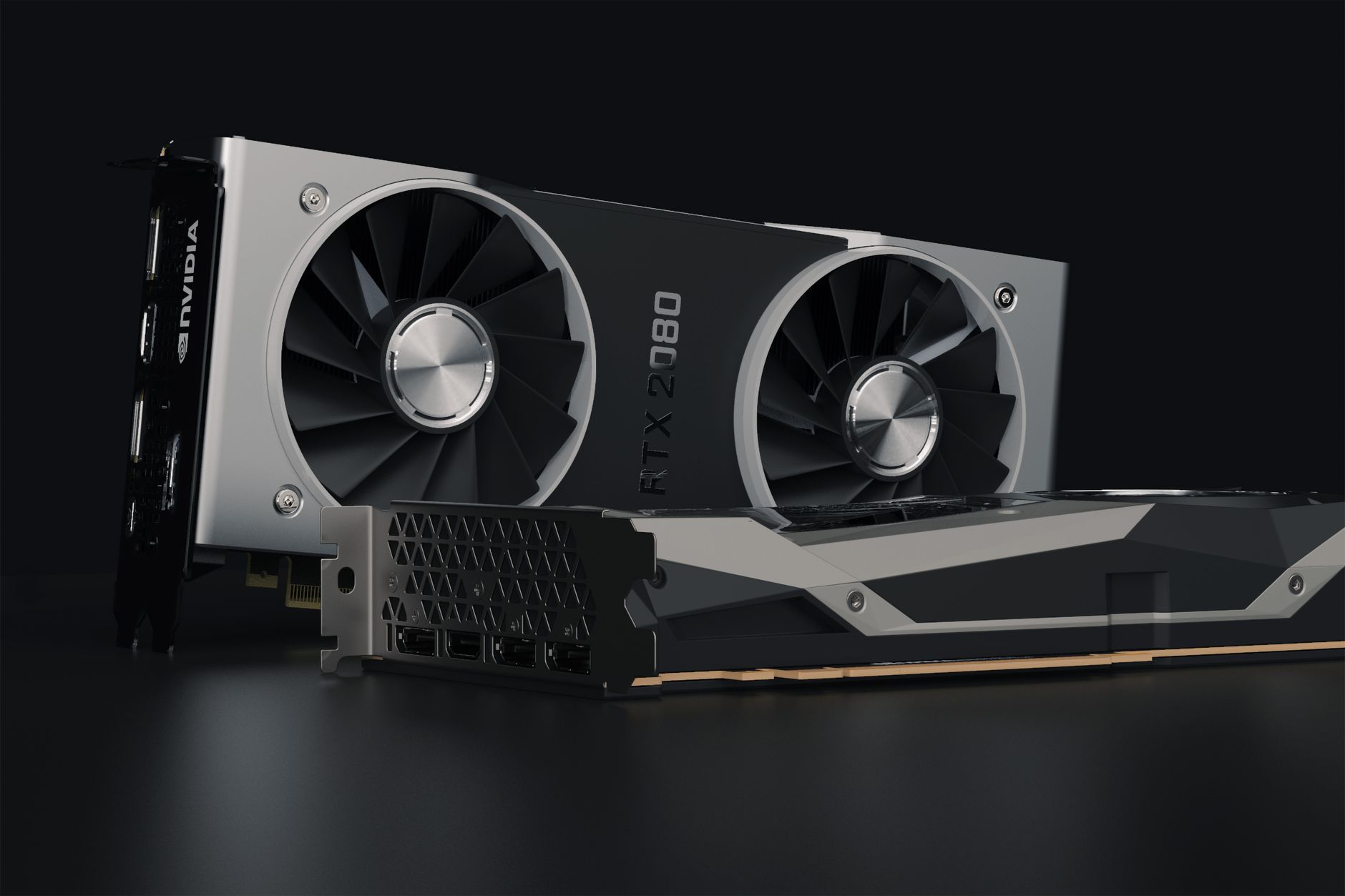

When shopping for modern computer hardware, you will frequently encounter the term RTX on NVIDIA graphics cards. RTX stands for Ray Tracing Texel eXtreme, a visual technology that uses dedicated hardware to simulate real-world lighting, reflections, and shadows for significantly more realistic gaming and creative applications.
Understanding the Hardware: RT Cores and Tensor Cores
Historically, complex lighting effects like ray tracing were restricted to non-real-time applications, such as CGI rendering for movies and photorealistic architectural visualizations. Traditional video games had to rely on direct lighting and precalculated indirect contributions to maintain playable frame rates. The introduction of the RTX series changed this paradigm by integrating dedicated hardware straight onto the silicon.
At a hardware level, RTX cards achieve real-time ray tracing through fixed-function RT Cores. These specialized processing units are built specifically to accelerate the complex mathematical operations needed to simulate rays of light, including bounding volume hierarchy traversal. Because ray tracing remains computationally intensive, many software developers use a hybrid rendering approach, combining traditional rasterization with real-time ray tracing powered by the GPU.
In addition to RT cores, every RTX graphics card includes Tensor Cores. While RT cores focus strictly on light simulation, Tensor Cores are dedicated processing units built for deep learning and artificial intelligence computations. These cores power cutting-edge features like DLSS (Deep Learning Super Sampling) and neural rendering technologies, enabling high frame rates and sharp visuals without completely sacrificing performance.
Beyond Gaming: Professional Visual Computing and AI
Although consumer versions like the GeForce RTX series are widely known for mainstream PC gaming, the underlying platform extends far beyond entertainment. NVIDIA RTX is a comprehensive visual computing platform used across workstations for demanding professional tasks.
In professional settings, these GPUs help engineers and designers create complex, large-scale models in product design and architecture. They are also heavily utilized in energy exploration, scientific visualization, and film production. Creators benefit from NVIDIA Studio drivers, which are engineered specifically to provide maximum stability alongside RTX accelerations in top creative software for video editing, 3D rendering, and graphic design.
Furthermore, because of the inclusion of Tensor Cores, RTX hardware plays a major role in artificial intelligence development. Developers and power users leverage built-in AI processors to accelerate machine learning workflows, run local large language models (LLMs), and improve communication clarity using utility suites like NVIDIA Broadcast.
Comparing Legacy Graphics to Modern RTX Capabilities
To understand the leap forward that RTX brought to the market, it helps to examine how traditional graphics hardware differs from modern RTX implementations.
| Feature | Traditional Graphics Cards (Pre-RTX) | Nvidia RTX Graphics Cards |
|---|---|---|
| Lighting Simulation | Rasterization with precalculated indirect lighting and direct light maps. | Real-time ray tracing and path tracing powered by dedicated RT Cores. |
| AI and Deep Learning | Little to no native hardware acceleration for AI workloads. | Dedicated Tensor Cores for neural rendering, DLSS, and AI training. |
| Application Scope | Primarily optimized for standard rasterized gaming and basic media consumption. | Comprehensive platform supporting gaming, professional rendering, video production, and AI workflows. |
Ultimately, an RTX GPU is much more than just a faster graphics card for gaming. By combining hardware-accelerated ray tracing with robust artificial intelligence processing via Tensor Cores, the RTX architecture established a new baseline for interactive computer graphics and modern computing workloads.
Frequently Asked Questions
What does RTX stand for on an NVIDIA graphics card?
RTX stands for Ray Tracing Texel eXtreme. It designates modern NVIDIA graphics cards built with dedicated hardware for real-time ray tracing and artificial intelligence computations.
How do RT cores improve video games?
RT cores are dedicated processing units built into the GPU that handle the heavy mathematical calculations required to simulate real-world lighting, shadows, and reflections in real time. This replaces older methods of relying entirely on direct lighting and precalculated indirect contributions.
Can RTX graphics cards be used for tasks other than gaming?
Yes, RTX cards feature Tensor Cores designed for deep learning, artificial intelligence model training, and neural rendering. This makes them powerful tools for professional workflows like video editing, 3D rendering, graphic design, and scientific visualization.
References & Sources
- What Does 'RTX' Actually Mean On An Nvidia Graphics Card?
- What Does 'RTX' Actually Mean On An Nvidia Graphics Card?
- Nvidia RTX - Wikipedia
- GeForce RTX | Ultimate Ray Tracing & AI | NVIDIA
- GeForce RTX | Ultimate Ray Tracing & AI | NVIDIA
Editorial Note: This article was researched via verified live web sources and published on 2026-11-18. Questions or feedback? Contact the editorial staff at TrendsInNews.
Photo credit: Nana Dua / Pexels