
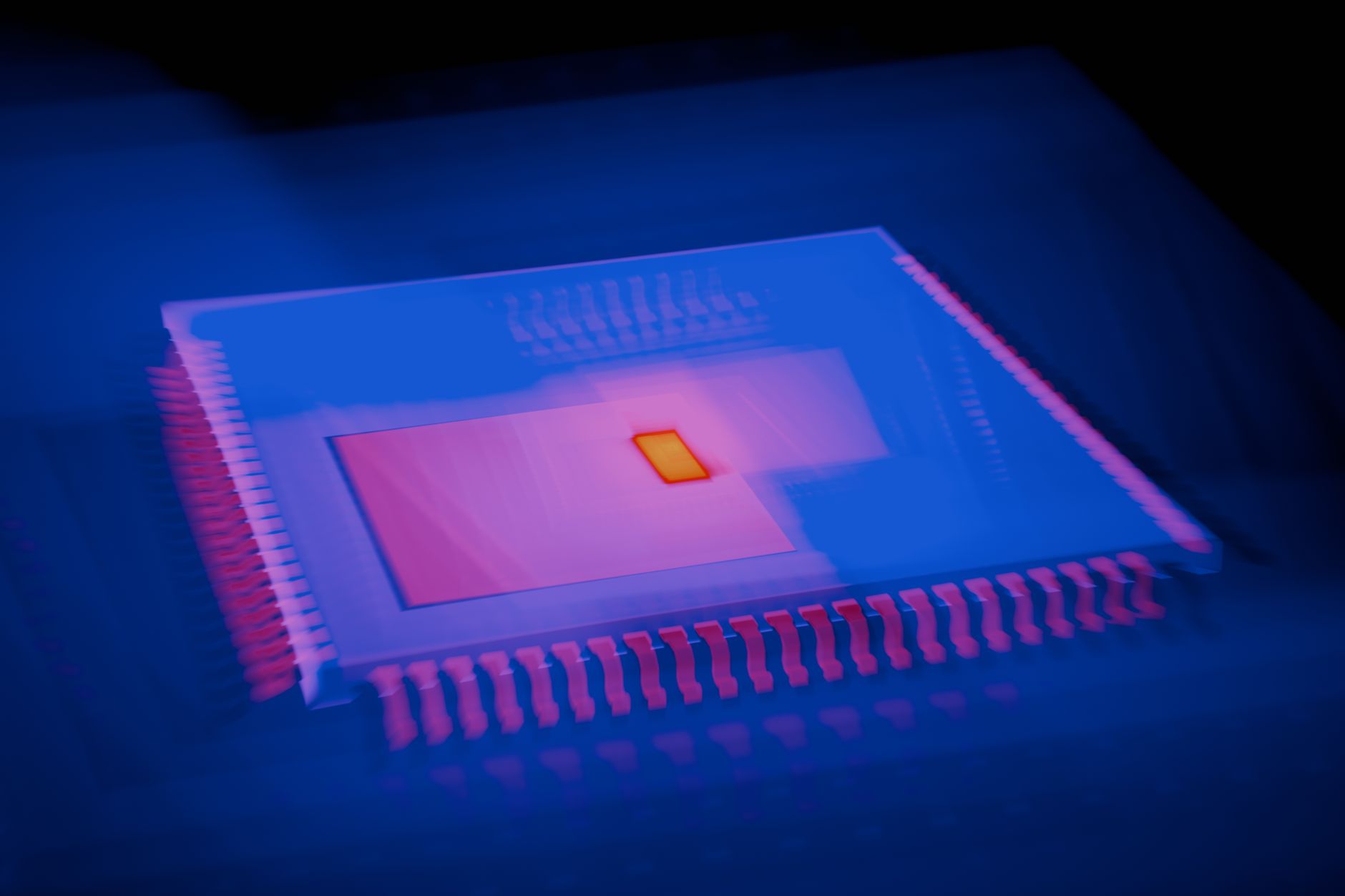

Quantum computing represents a revolutionary approach to processing information by harnessing the fundamental rules of quantum mechanics. Unlike traditional systems that rely strictly on binary logic, quantum systems utilize specialized hardware to control quantum states and solve problems that are entirely intractable for classical supercomputers.
Understanding the Meaning of Quantum Computing
At its core, quantum computing is an emergent field of computer science, engineering, and physics. It builds upon the principles of quantum mechanics, which describe how very small objects behave differently from large objects. Because quantum mechanics provides the foundational laws for our entire universe, every system at a microscopic level is fundamentally a quantum system.
Traditional computers rely on standard microprocessors that manipulate electrical signals representing binary data. Conversely, quantum technology uses specialized mechanics-based hardware to process data using quantum logic and interference. This multidisciplinary domain encompasses everything from experimental quantum hardware research to sophisticated application development and algorithm design.
Classical Bits Versus Quantum Qubits
To fully grasp quantum computing, one must understand how information units differ between traditional and quantum architectures. In conventional digital computing, information is encoded as binary digits, commonly referred to as bits. A bit serves as the basic unit of information, holding a discrete state of either a 0 or a 1.
Quantum computing replaces the traditional bit with the quantum bit, or qubit. Qubits are represented by quantum particles, and the precise manipulation of these particles by control devices forms the core of a quantum processor's capability. Owing to unique physical properties, a qubit can exist uniquely as a 0 or a 1, or as a simultaneous combination of both states.
| Feature | Classical Computing | Quantum Computing |
|---|---|---|
| Information Unit | Bit (0 or 1) | Qubit (0, 1, or both) |
| Core Principle | Boolean algebra and binary logic | Quantum mechanics and interference |
| State Representation | Mutually exclusive single states | Superposition of multiple states |
| System Correlation | Independent operations | Quantum entanglement |
The Role of Superposition and Entanglement
The immense processing power of a quantum machine stems from two uniquely quantum phenomena: superposition and entanglement.
Superposition allows a single qubit to represent multiple possibilities at once. When multiple qubits are grouped together to form a register, they can become correlated with each other in a subtle and powerful way that cannot exist in the ordinary, classical world. This phenomenon is known as quantum entanglement.
The combination of superposition and entanglement means that a quantum register can encode information across a vast number of states simultaneously. By manipulating information stored in these qubits using gate operations and quantum circuits, scientists can quickly produce high-quality solutions to difficult problems that standard computers simply cannot process fast enough.
Frequently Asked Questions
What does quantum computing mean in simple terms?
Quantum computing is a rapidly emerging approach to processing information using the physics of quantum mechanics. Instead of using standard digital units, it leverages the behavior of subatomic particles to perform complex calculations at speeds impossible for traditional machines.
How do qubits differ from classical bits?
Classical bits can only represent a discrete value of either 0 or 1. In contrast, quantum bits, or qubits, can exist as 0, 1, or a simultaneous combination of both states through a phenomenon called superposition.
Why are quantum computers more powerful than classical supercomputers?
They harness both superposition and quantum entanglement to encode exponentially more information and test multiple solutions at the same time. This allows them to tackle intractable problems that remain completely out of reach for even the largest modern supercomputers.
References & Sources
- DOE Explains...Quantum Computing | Department of Energy
- What Is Quantum Computing? | IBM
- What is Quantum Computing? - NQCC
- What Is Quantum Computing? | Microsoft Azure
- What is Quantum Computing? - Quantum Computing Explained - AWS
Editorial Note: This article was researched via verified live web sources and published on 2026-11-14. Questions or feedback? Contact the editorial staff at TrendsInNews.
Photo credit: Steve A Johnson / Pexels